
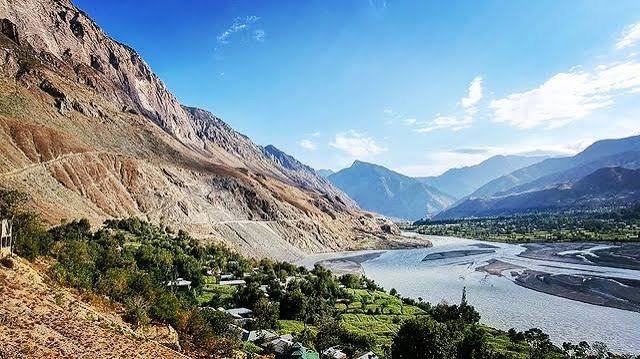

In northern Pakistan, Chitral sits among the dramatic peaks and deep valleys of the Hindu Kush. The region brings together high mountain scenery, orchards, rivers, historic places and living cultural traditions. From the lively streets of Chitral town to the remote valleys of Upper Chitral, every journey reveals a different side of this remarkable landscape.
A Valley Beneath the Hindu Kush
Chitral lies in Khyber Pakhtunkhwa, close to the borders with Afghanistan and Gilgit-Baltistan. Its landscapes range from river valleys and cultivated terraces to alpine meadows, glaciers and snow-covered mountains. Tirich Mir, the highest peak of the Hindu Kush, dominates the region’s skyline and draws the attention of trekkers and mountaineers.
The Chitral River winds through the valley, linking settlements and fields along its route. In lower areas, orchards of apples, apricots, pears and pomegranates add colour to the landscape. Higher up, roads climb towards mountain passes and remote communities where life follows the seasons. Pakistan’s national tourism guide describes Chitral as a mix of rugged mountains, rivers, hot springs and fruit-growing valleys beneath Tirich Mir. tourism.gov.pk
Chitral Town and Its Heritage
Chitral town is a natural starting point for exploring the wider region. Its bazaar, riverside setting and mountain views make it a welcoming base before travelling to nearby valleys. Chitral Fort is one of the town’s best-known historic landmarks, recalling the region’s history as a strategically important mountain state. Visitors can explore the area around the fort, visit local shops and sample Chitrali dishes.
The town also offers a first introduction to the region’s languages and hospitality. Khowar is widely associated with Chitral, alongside other local languages spoken in different communities. Traditional music, including the Chitrali sitar, is an important part of local cultural life. Taking time to listen, meet local people and learn about their traditions can make a visit more meaningful than simply passing through.
The Kalash Valleys: A Living Cultural Landscape
Among Chitral’s most distinctive destinations are the Kalash valleys of Bumburet, Rumbur and Birir. These mountain valleys are home to the Kalasha people, an Indigenous community with their own traditions, beliefs, music, dress and festivals. Surrounded by forested slopes and steep mountain terrain, the villages offer both striking scenery and a chance to learn about a living culture.
Visitors should approach the valleys with respect. Ask before photographing people, homes or ceremonies, follow local guidance, and remember that festivals are meaningful community occasions, not performances staged for tourists. The Government of Khyber Pakhtunkhwa has described the Kalash Cultural Landscape as a living heritage shaped by the close relationship between community life, traditions and the surrounding environment. DGIPR Khyber Pakhtunkhwa
Upper Chitral, Shandur and the High Valleys
Beyond Chitral town, Upper Chitral opens into a world of broad mountain valleys and high passes. Mastuj and the surrounding settlements provide a glimpse of everyday life in this elevated landscape. For travellers seeking quieter routes, the valleys towards Broghil offer remote scenery, alpine pastures and access to challenging trekking areas. Road access and weather can vary, so it is important to check local conditions before setting out.
Shandur Pass is one of the region’s most celebrated destinations. At around 3,700 metres above sea level, its open plateau hosts the famous Shandur Polo Festival, where teams from Chitral and Gilgit-Baltistan compete in traditional freestyle polo. The event combines sport with music, food and mountain scenery, creating a lively gathering in an otherwise remote setting. DGIPR Khyber Pakhtunkhwa
Outdoor Experiences and Wildlife
Chitral and the Hindu Kush offer opportunities for trekking, camping, photography, fishing and scenic drives. Short walks near villages can reveal orchards, streams and traditional homes, while longer routes lead into high mountain terrain. Experienced trekkers may choose challenging expeditions that cross passes or approach glaciers, but such journeys require planning, proper equipment and knowledgeable local support.
The region’s changing elevations support a variety of habitats, from riverbanks and forests to alpine meadows. Chitral Gol National Park is one of the area’s important natural sites. Travellers interested in wildlife should follow park rules, keep a respectful distance from animals and avoid disturbing their habitat. Responsible tourism helps protect the ecosystems that make these valleys so special.
When to Visit Chitral
The best time to visit depends on what you want to experience. Warmer months are generally suitable for exploring high valleys and trekking routes, while spring and early summer bring blossoms and greener scenery to lower areas. Autumn offers clear mountain views and colourful orchards. Winters can bring snow and difficult access in higher parts of the region.
Mountain weather can change quickly, and road conditions may be affected by rain, snow or landslides. Check local travel advice, leave flexibility in your schedule and carry warm layers—even if the weather feels mild in town. If you are visiting for Shandur Polo Festival or a local celebration, confirm dates and travel arrangements before departure.
A Journey Worth Taking Slowly
Chitral is more than a collection of mountain viewpoints. It is a region where landscapes, history and community traditions are closely connected. You can spend one day exploring Chitral town, another visiting the Kalash valleys, and several more travelling through Upper Chitral towards Shandur or Broghil. Each route offers a different perspective on the Hindu Kush.
For travellers seeking mountain scenery alongside cultural depth, Chitral offers a memorable experience. Move at a relaxed pace, listen to local voices, respect community customs and leave the valleys as clean as you found them. The result is a journey through one of Pakistan’s most distinctive mountain regions—one that stays with you long after the road turns back towards the plains.
0 Comment